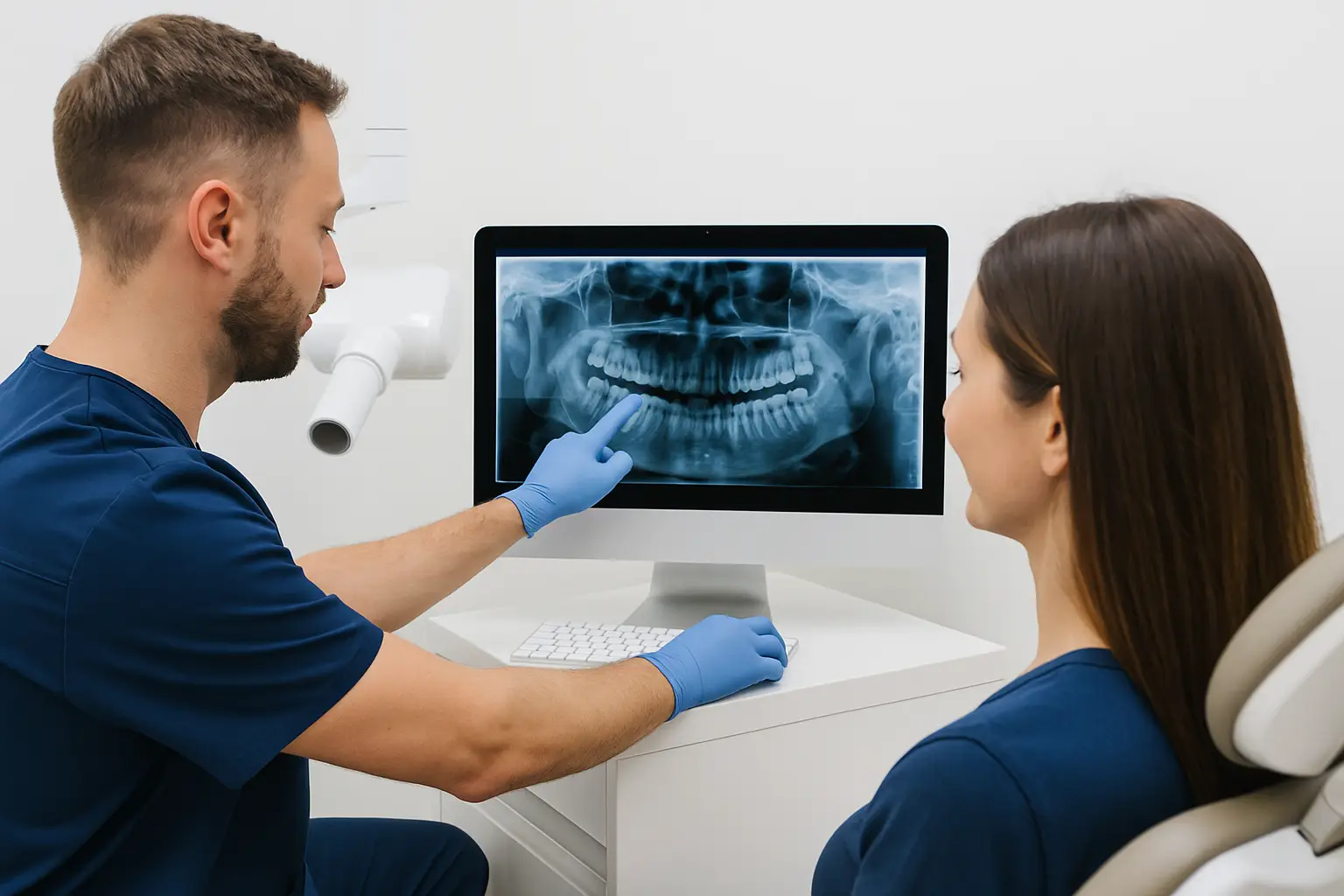
Safer, Smarter Imaging with Digital X-Rays
Digital radiographs (commonly called x-rays) are one of the most important tools we use to diagnose and plan your dental care. At our office, we use modern digital x-ray technology to provide faster, safer, and more precise imaging all while improving your comfort.
Traditional x-rays used film, similar to an old-school photograph, and required chemical development. Today, digital x-rays use a small electronic sensor to instantly capture high-quality images with up to 90% less radiation than conventional film-based methods, which were already considered low risk.
Digital imaging is not only safer and more environmentally friendly, it’s also more efficient. No waiting, no harsh chemicals, and no guessing just clear, immediate results to help guide your care.
What Is A Digital X-Ray?
X-rays or radiographs have been a cornerstone of preventive dental care for decades. They’re a form of electromagnetic radiation that can pass through soft tissue but are absorbed by denser materials like teeth and bone. That contrast is what allows dentists to see what the eye can’t.
While originally called “x-rays” because their discoverers didn’t know exactly what they were, the name stuck and so did their importance in dentistry.
Dental x-rays help us spot problems early and guide your care with precision. We use them to:
-
Detect cavities between teeth or under fillings
-
Evaluate tooth roots and surrounding bone health
-
Identify signs of gum disease
-
Analyze tooth and jaw alignment
-
Monitor development in children and teens
Fast, safe, and incredibly useful x-rays help us keep your smile healthy from the inside out

Type of Dental Digital X-Rays
While there are different types of dental x-rays, the most common are called bite-wing x-rays named after the small wing-shaped tabs patients used to bite down on during traditional film x-rays. These images are typically taken right in the dental chair and capture detailed views of several teeth at once, including the roots and surrounding bone.
To take the x-ray, a team member will place a small sensor in your mouth and ask you to bite down gently. Then, a tube-shaped device (the x-ray emitter) is positioned near your cheek. It emits x-rays not light or heat that pass through your mouth and are captured by the sensor.
The process is quick, painless, and completely safe. Most patients feel no discomfort at all.