Catching Cavities Early Before They Cause Trouble
We’re committed to using the latest technology to give you the best care possible and that includes detecting problems before they become painful or costly. That’s why we use a laser-based early detection system to identify hidden decay in the grooves and crevices of your teeth often before it can be seen by the naked eye.
Cavities (also called caries) usually don’t cause pain in the earliest stages, and the damage often starts microscopically, long before it’s visible. Even with regular exams, these tiny trouble spots can be hard to spot which is why early cavity detection is so valuable.
Our tool uses a safe, low-powered laser light to scan the surface of your teeth. It’s completely painless no heat, no discomfort just a smarter way to stay ahead of decay and protect your smile long-term.
Why Is Early Cavity Detection Important?
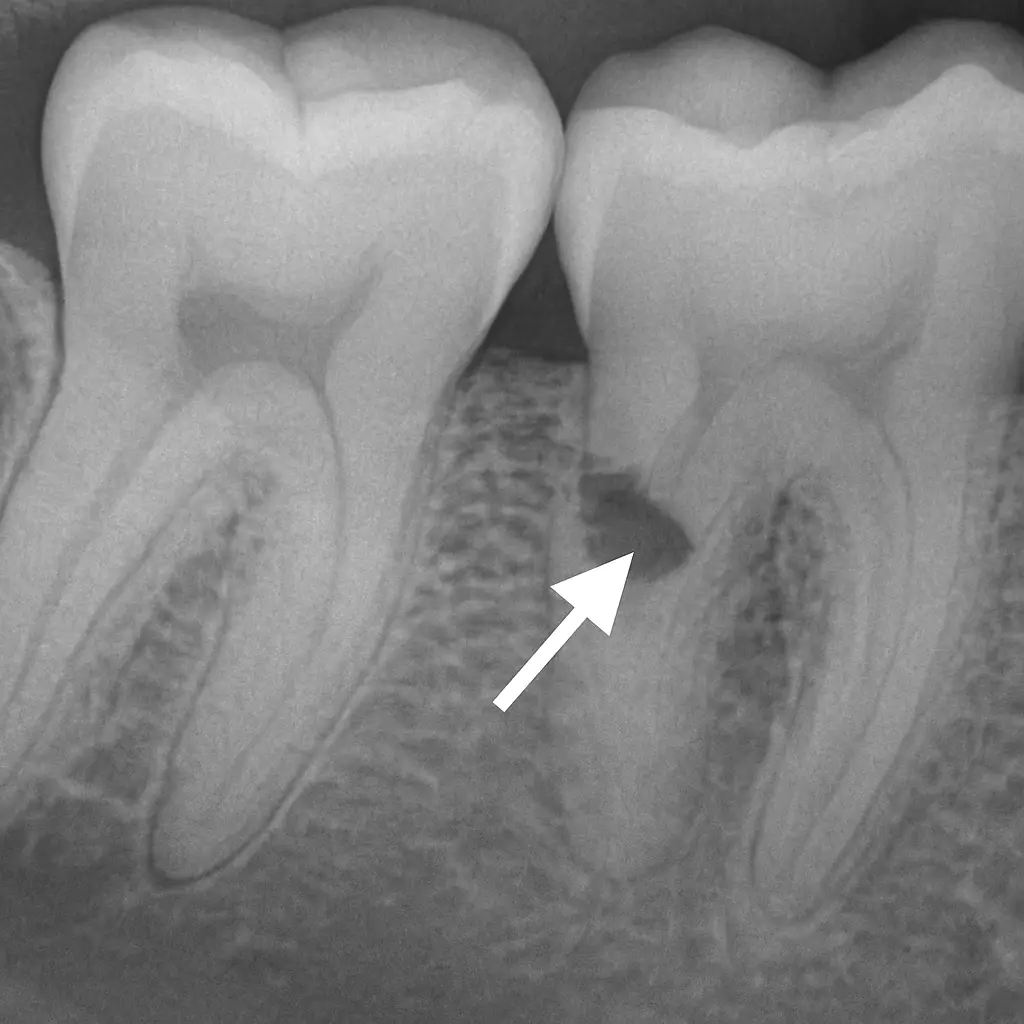
Along with a trained eye, one of the most essential tools for detecting cavities is still the x-ray. X-rays help us see what’s happening in the tight spaces between your teeth where decay can often hide. But by the time a cavity shows up clearly on an x-ray or during a visual exam, it’s usually already progressed.
That’s why early detection matters. The earlier we catch a cavity, the simpler and less expensive the treatment. Small spots of decay can often be treated quickly and painlessly, before they cause real damage.
While prevention is always the goal, we know not every smile is perfect all the time. Early detection gives us a chance to stay ahead of the problem so you can keep your smile healthy, strong, and hassle-free.

How Cavities Are Detected
Though your teeth may appear solid, they’re actually made of semi-translucent layers. The outer layer, enamel, is smooth and shiny, while the inner layer, dentin, is softer and more yellow. Light can pass through both but not in the same way. Cavities begin in the enamel and, if left untreated, can progress into the dentin and beyond, eventually reaching the tooth root.
With our early detection system, we shine a low-powered laser light across the surface of your teeth. Areas with damage or decay reflect light differently. The technology measures fluorescence how much light your tooth absorbs or bounces back and sends real-time feedback to a computer.
As the scanner moves along your teeth, we’re able to spot subtle changes that may signal the start of a cavity. That allows your dentist to take a closer look and recommend treatment before the problem becomes bigger, more painful, or more expensive.